We want to create the biggest online listing collection of Forts around the world!
Please add you short stay fort rentals now.
A fort or fortress is a building designed to withstand the hars condtions of medieval warfare. However, these days, some forts are transferred into the most amazing places to stay ! Enjoy the interesting history of a fort combined with unmatched luxury! We have select the most amazin forts for you to stay in !
List your fort on this page?
Add linkStaying in a fort: a traveller's guide to ramparts, sea forts and fortified towns
A fort was never meant to be comfortable. It was built to watch a harbour, guard a trade route or hold a hilltop against attack, and every wall, gun platform and narrow gate had a job to do. That is exactly what makes a night inside one so memorable. You fall asleep behind walls several metres thick, wake up to a view that soldiers once scanned for approaching ships, and walk the same ramparts that defined the history of a coastline or a kingdom.
Around the world, forts of many shapes and ages have found a second life as guesthouses, holiday rentals and heritage hotels. This guide explains the main types, what daily life inside thick defensive walls is really like, and what to check before you choose one of the forts listed on this page.
A short field guide to fort types
The design of a fort tells you a lot about the stay you will have.
- Star forts have angled bastions that form a star shape when seen from above. They were designed to withstand cannon fire and are often ringed by moats and earthworks. Some, such as Bourtange in the Netherlands, enclose small villages where you can stay among the old barracks and houses.
- Coastal forts and batteries line headlands and harbour entrances on almost every continent. Many now hold apartments or rooms in former officers' quarters.
- Sea forts stand on islands, reefs or artificial platforms offshore. It feels like having your own island.
- Martello towers and similar defensive towers are round, squat and very solid. Examples survive along the coasts of Ireland and England and in several former colonies. Converted towers are usually small, with rooms stacked on top of each other and a roof terrace where the gun once stood.
- Hill forts in India, above all in Rajasthan, crown rocky ridges above towns and deserts. Some have been turned into heritage hotels, while at Jaisalmer Fort people still live, work and run guesthouses inside the walls.
- Colonial trading forts were built by European powers along trade routes in Africa, Asia and the Americas. Portuguese, Dutch and British forts still guard old harbours from East Africa to India.
- Fortified old towns are whole historic centres enclosed by defensive walls, such as Galle Fort in Sri Lanka or the walled city of Cartagena in Colombia. Here you stay in a house or small hotel within the walls rather than in the fort itself.
History that deserves respect
Many forts are linked to conquest and empire, and some to the darkest chapters of human history. The forts and trading posts along the coast of West Africa, particularly in present-day Ghana, were central to the transatlantic slave trade, and enormous numbers of enslaved Africans were held in their dungeons before being forced onto ships. Forts across the Caribbean and parts of the Americas were built to protect colonial trade that depended on enslaved labour. Some of these sites are now memorials and museums, and a few towns around them welcome visitors to stay nearby.
If you visit or stay close to one of these places, take time to learn the history from local guides and museums, follow any rules about photography and behaviour, and remember that for many descendants these are places of mourning and remembrance. A thoughtful visit is part of a meaningful stay.
Life inside thick walls
A few practical points make the difference between a great fort stay and an uncomfortable one.
- Small windows and dim rooms. Walls built to stop cannonballs rarely have big windows. Rooms in casemates, barracks or towers can be cool and quiet but quite dark. If light matters to you, ask about rooms on the upper levels or with a terrace.
- Heat and damp. Stone and earth keep interiors cooler in hot climates, which is welcome in tropical and desert regions. In cooler or wetter places, the same walls can feel damp. Ask about ventilation, heating, fans or air conditioning.
- Stairs and uneven ground. Ramps, worn steps, cobbles and steep gateways are normal. Lifts are rare, and cars may not be allowed inside a fortified town, so expect to carry luggage some distance.
- Heritage rules. Protected forts often have strict rules on noise, fires, drones, decorations and even where you may walk. Some areas stay open to day visitors, so your front door may face a stream of tourists during opening hours.
Children, ramparts and steep drops
Forts are thrilling for children, with hidden passages, cannons and endless walls to explore. But ramparts were built for defence, not safety, and many have low parapets or none at all, with sheer drops into moats, ditches or the sea. Keep young children close on walls and bastions, ask the owner which areas are fenced, and check whether terraces and roofs are secure before you book. Sea forts add deep water on every side.
Sea forts, tides and weather
Staying on an offshore fort or an island battery is one of the most unusual experiences in this niche. It also needs extra planning. Access is usually by boat, sometimes only at certain tides, and transfers can be cancelled in strong wind or heavy swell. Pack medication and essentials in your hand luggage, be ready for a delayed arrival or departure, and ask what happens if you cannot reach the fort on your booked day. Some forts on tidal islands can be reached on foot at low water; always check tide times locally and never try to cross when the water is rising.
When to go
Seasons change the experience completely. In the Southern Hemisphere the seasons are reversed, so the summer months in South Africa, Australia or southern South America fall around December to February. Tropical coasts, including the Caribbean, have a hurricane season, while parts of the Indian Ocean and the Pacific have cyclone seasons. South Asia has monsoon seasons that bring heavy rain and can make coastal forts humid and sea crossings rough. In desert regions such as Rajasthan, the cooler months are often the most pleasant for walking the ramparts, while summer heat can be intense. Ask the owner what the weather is really like during your dates.
Questions to ask before you book
- Do we rent the whole fort or tower, or share it with other guests, residents or day visitors?
- Are the ramparts, roofs and terraces fenced, and is the property suitable for young children?
- How many stairs are there, and can we drive to the door or must we carry luggage?
- How are the rooms cooled, heated and ventilated in the season we are travelling?
- For a sea fort: how do we get there, who arranges the boat, and what happens if the weather stops the crossing?
- Are there heritage rules we should know about, such as noise, drones, fires or restricted areas?
- Is there Wi-Fi, phone signal and a reliable supply of water and power?
- Where is the nearest shop, restaurant and medical help?
Tips for a better fort stay
Bring a torch or headlamp for dark stairways and night walks on the walls. Pack sturdy shoes with good grip, as old stone can be slippery when wet or worn smooth. Walk the ramparts early in the morning or at sunset, when the light is soft and day visitors have gone. And in a fortified town, explore on foot: the lanes inside the walls are often the best part of the stay.
Browse the forts in this collection
The forts on this page are grouped by continent, country and region. Every link goes directly to the owner's own website, where you can view the rooms, check availability and book directly. Do you own or manage a fort, tower or house inside a fortified town that welcomes guests? Add your link to the collection for free with the button above.
Looking for an awesome place to spend your holiday?
Or want to advertise your houseboat, lighthouse, treehouse or glamping?
Check these links below!
Blog posts
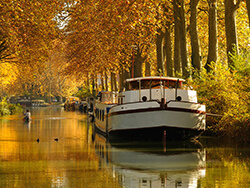
Barge river cruises in France
River cruises in France are the next luxury holiday destination. Cruise your private barge with cook down the French rivers.
Read more..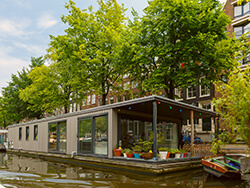
Rent a houseboat in Amsterdam
A houseboat is a great place to stay when visiting Amsterdam. Stay close to the city center but have a lot of private space.
Read more..